
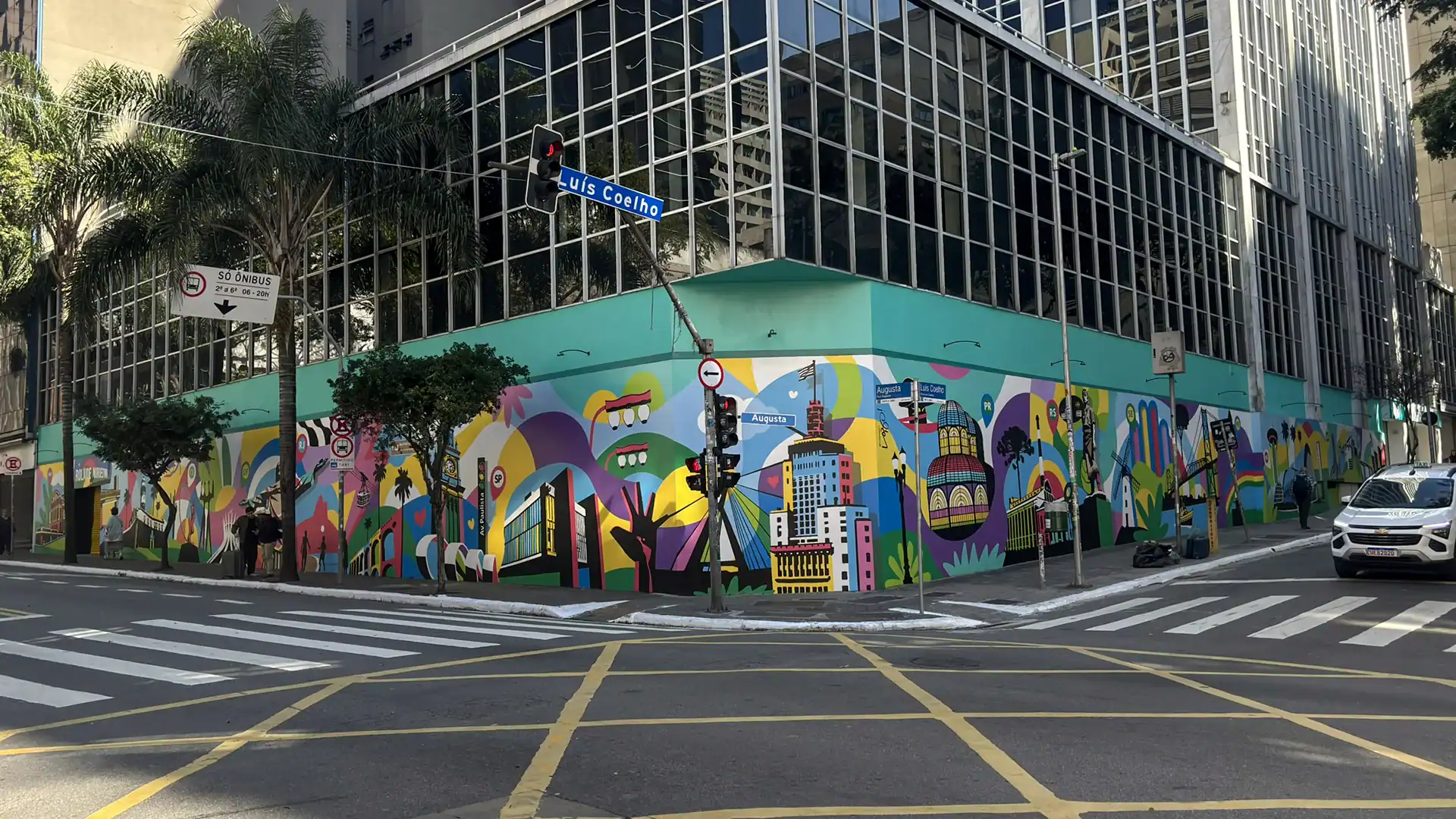
At a street corner in São Paulo, Brazil, you can find the Amazon, Rio de Janeiro, Brasília, and the country’s southernmost traditions without leaving the sidewalk.
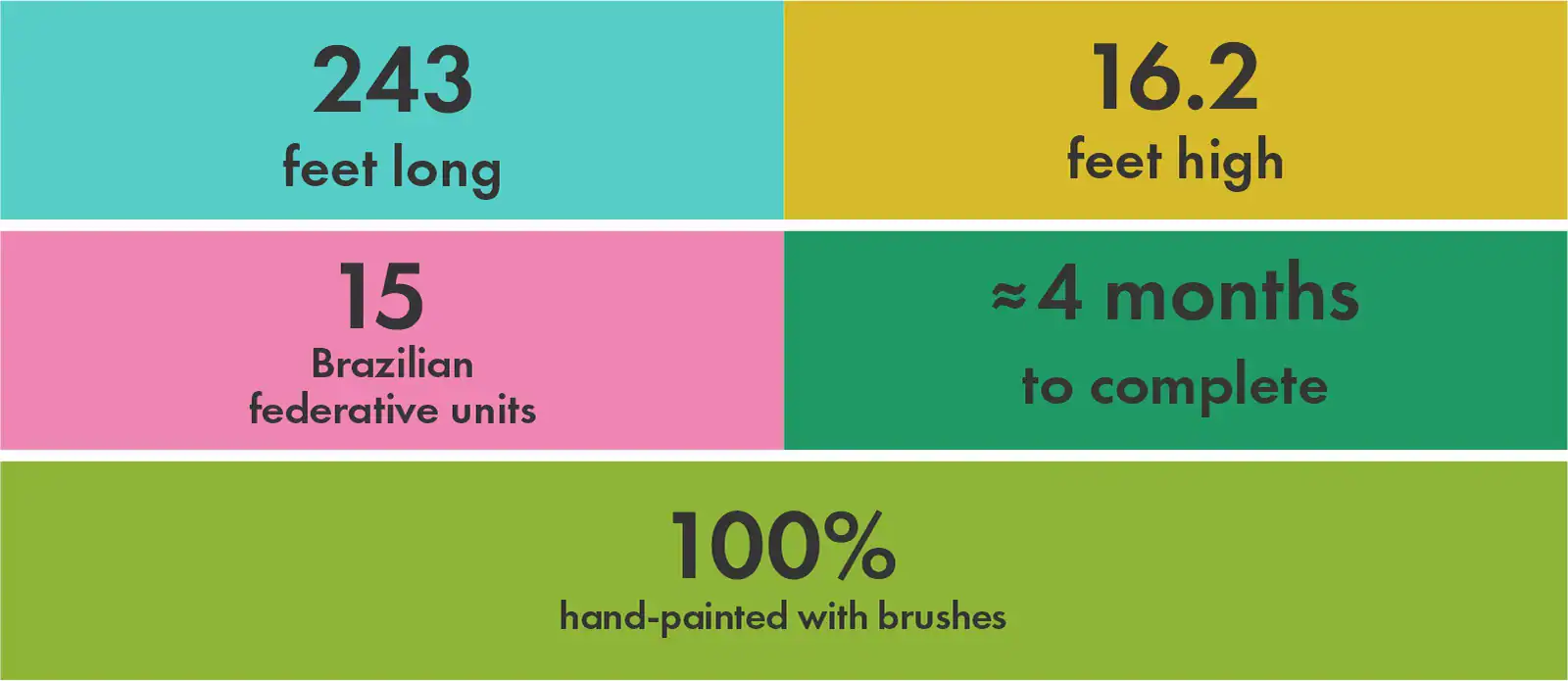
They’re part of Brasil em São Paulo (Brazil in São Paulo), a 243-foot-long mural by Brazilian Pop Art artist Lobo. Painted where Rua Augusta meets Rua Luís Coelho, just off Paulista Avenue, the work brings buildings, monuments, and familiar places from 14 Brazilian states and the Federal District onto a single wall.
The colors are bright. The black outlines are unmistakably Lobo’s. Every section was painted with brushes, not spray cans. Yet some of the most memorable moments took place in front of the wall, when passersby began pointing to places they recognized and telling stories about them.
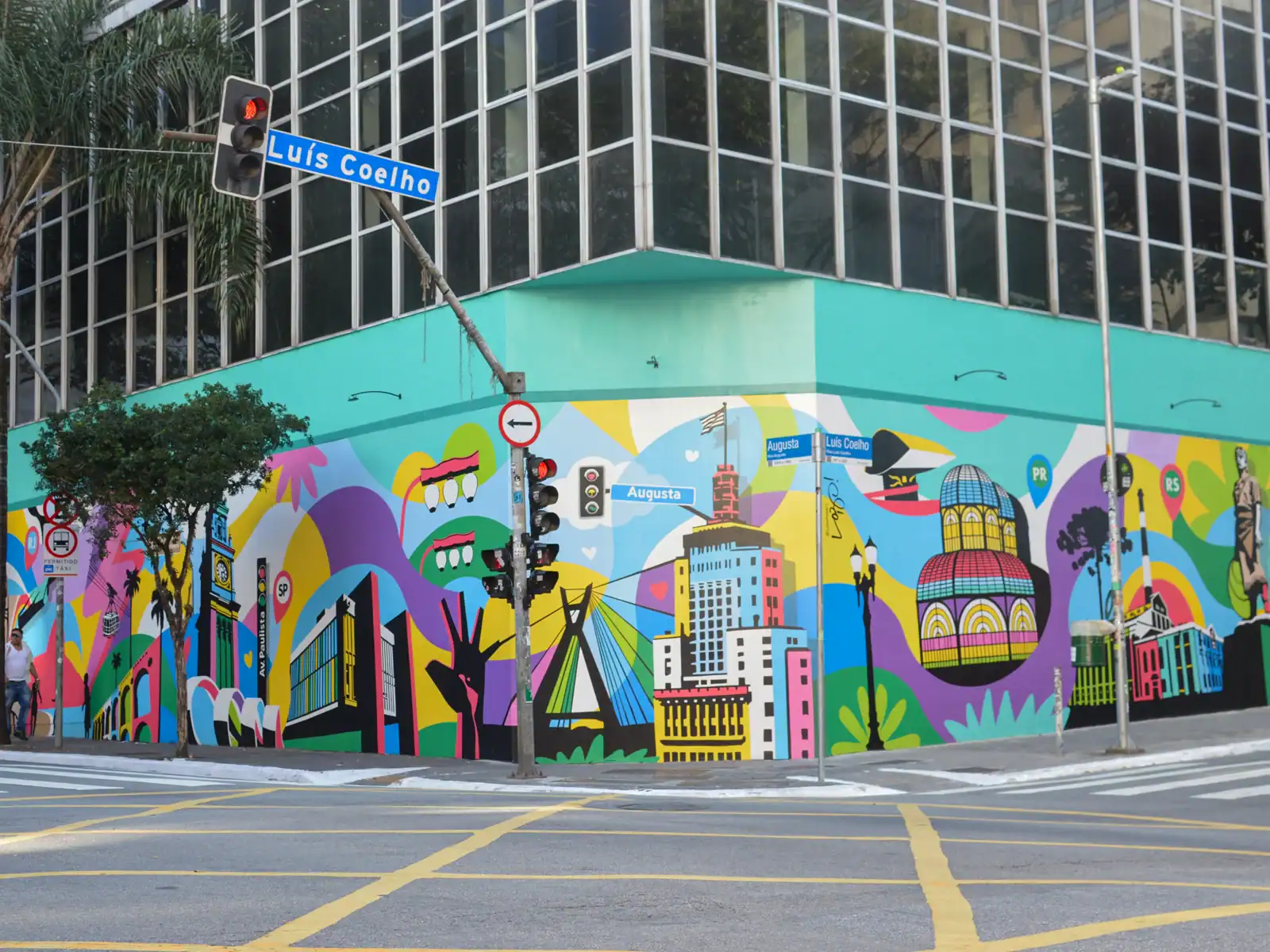
The mural brings together landmarks and cultural references from 14 Brazilian states and the Federal District:
A Portrait of Brazil, One Landmark at a Time
São Paulo has long been a meeting place for people from across Brazil. You hear it in the accents, see it in neighborhood businesses, and taste it in food brought from other regions. That mixture is part of what Brasil em São Paulo is about.
Lobo wasn’t interested in painting a literal map. He wanted the country to sit together on one wall, with distant places joined by the same colors and black lines. Familiar landmarks appear next to ones that may send even Brazilian visitors searching for an explanation.
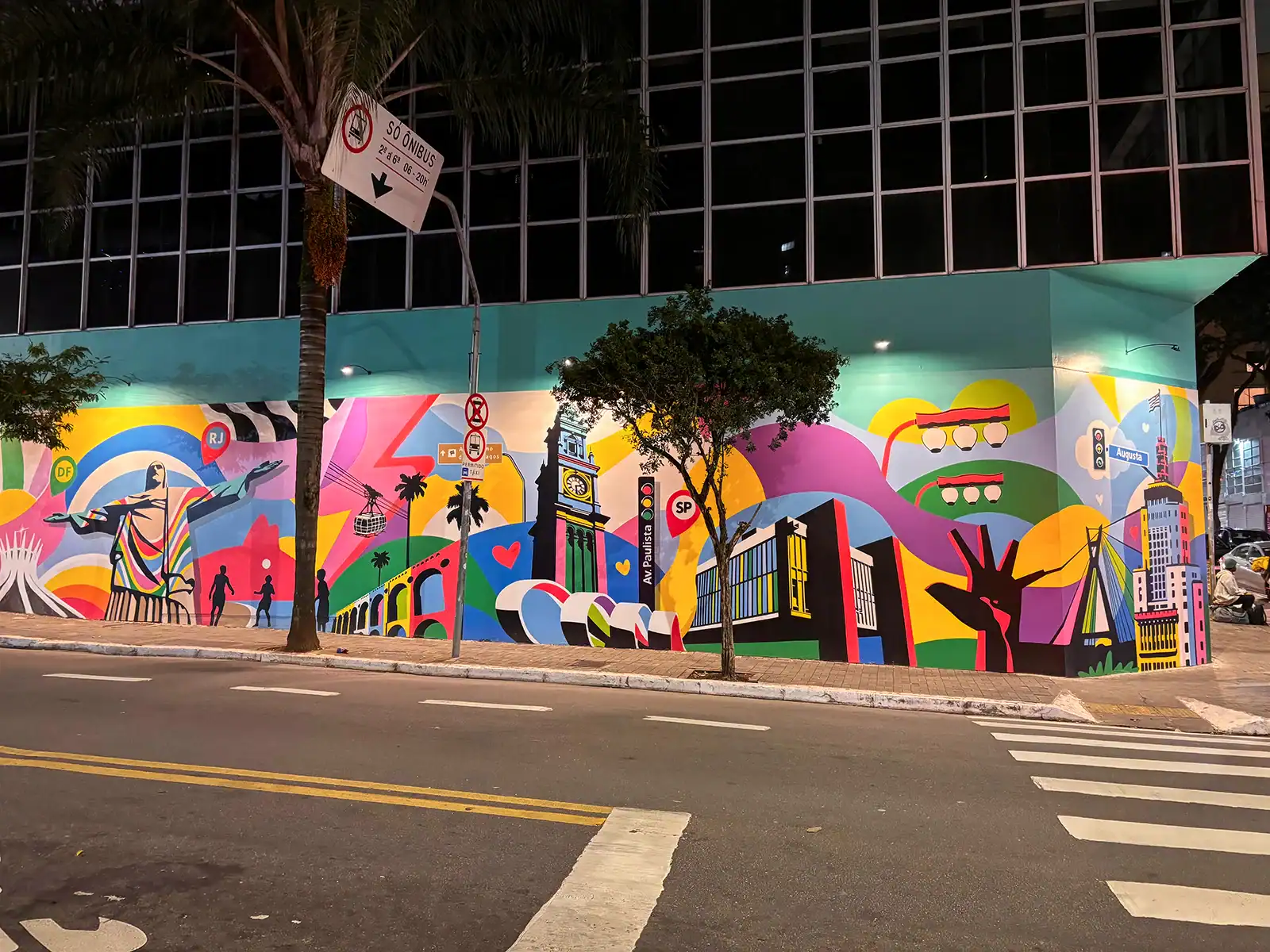
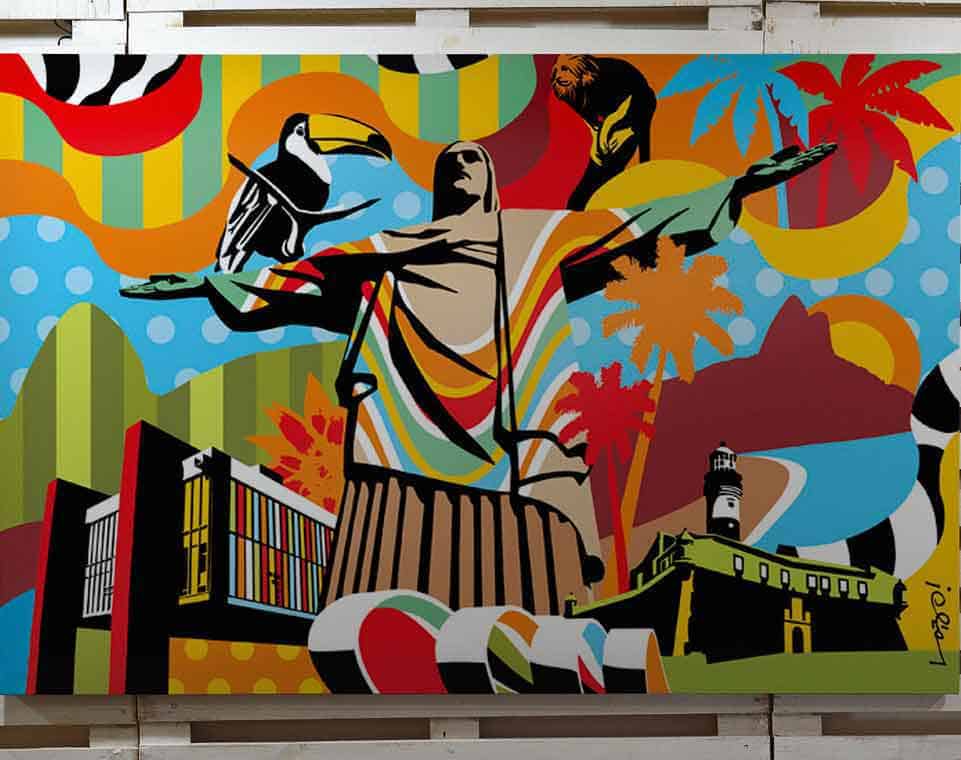
The Christ the Redeemer statue, the Lapa Arches, and the wave-patterned Copacabana promenade speak of Rio de Janeiro. Brasília is represented by its Cathedral, one of the best-known examples of the capital’s modernist architecture. From the Amazon region comes the Teatro Amazonas opera house in Manaus, a building whose ornate facade stands out even amid the mural’s intense colors.
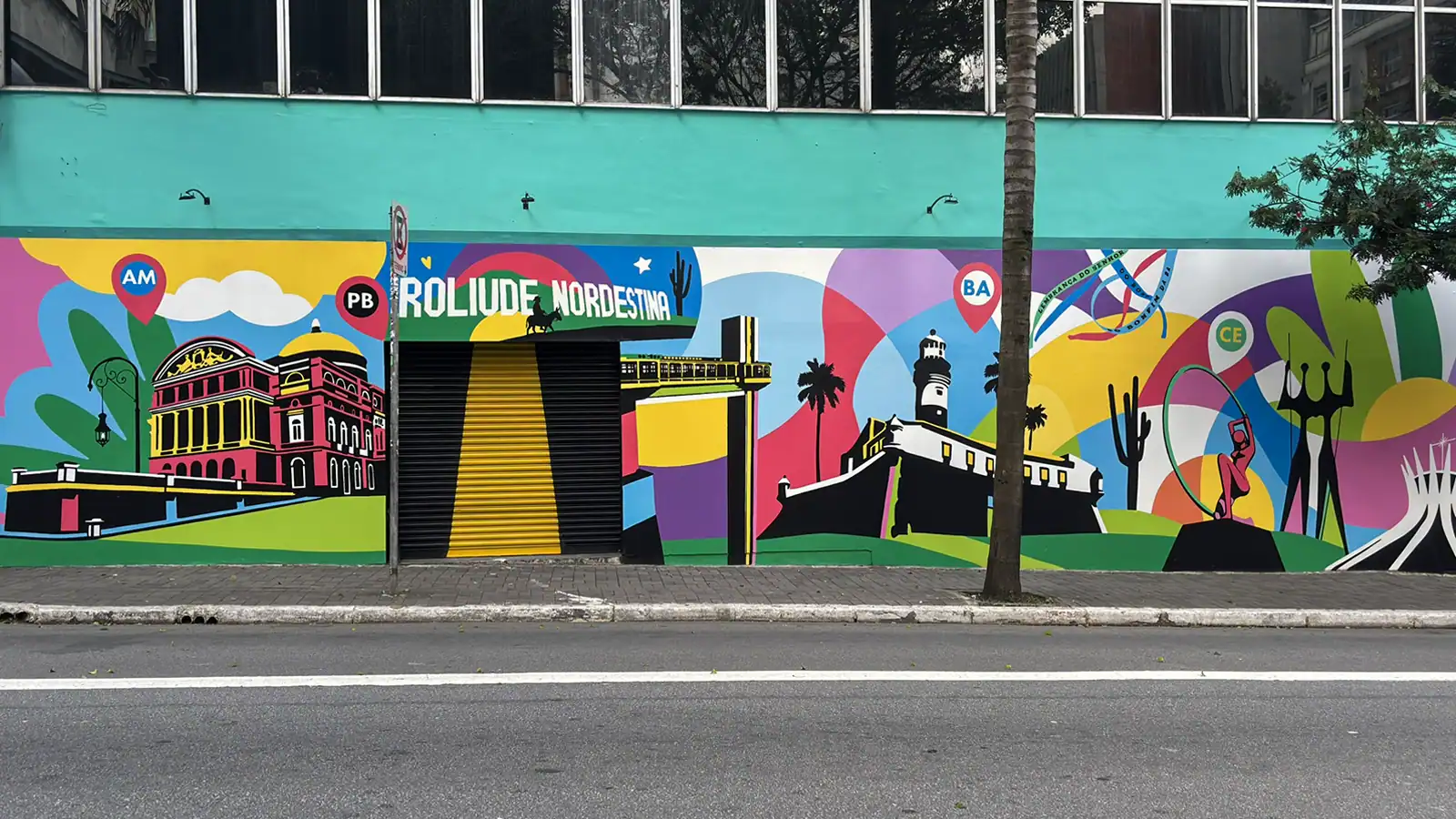
In another stretch of the painting, Cabaceiras in Paraíba makes an appearance through the playful Roliúde Nordestina sign. Salvador, in Bahia, is represented by the Barra Lighthouse and the Lacerda Elevator. Ceará appears through the figure of Iracema.
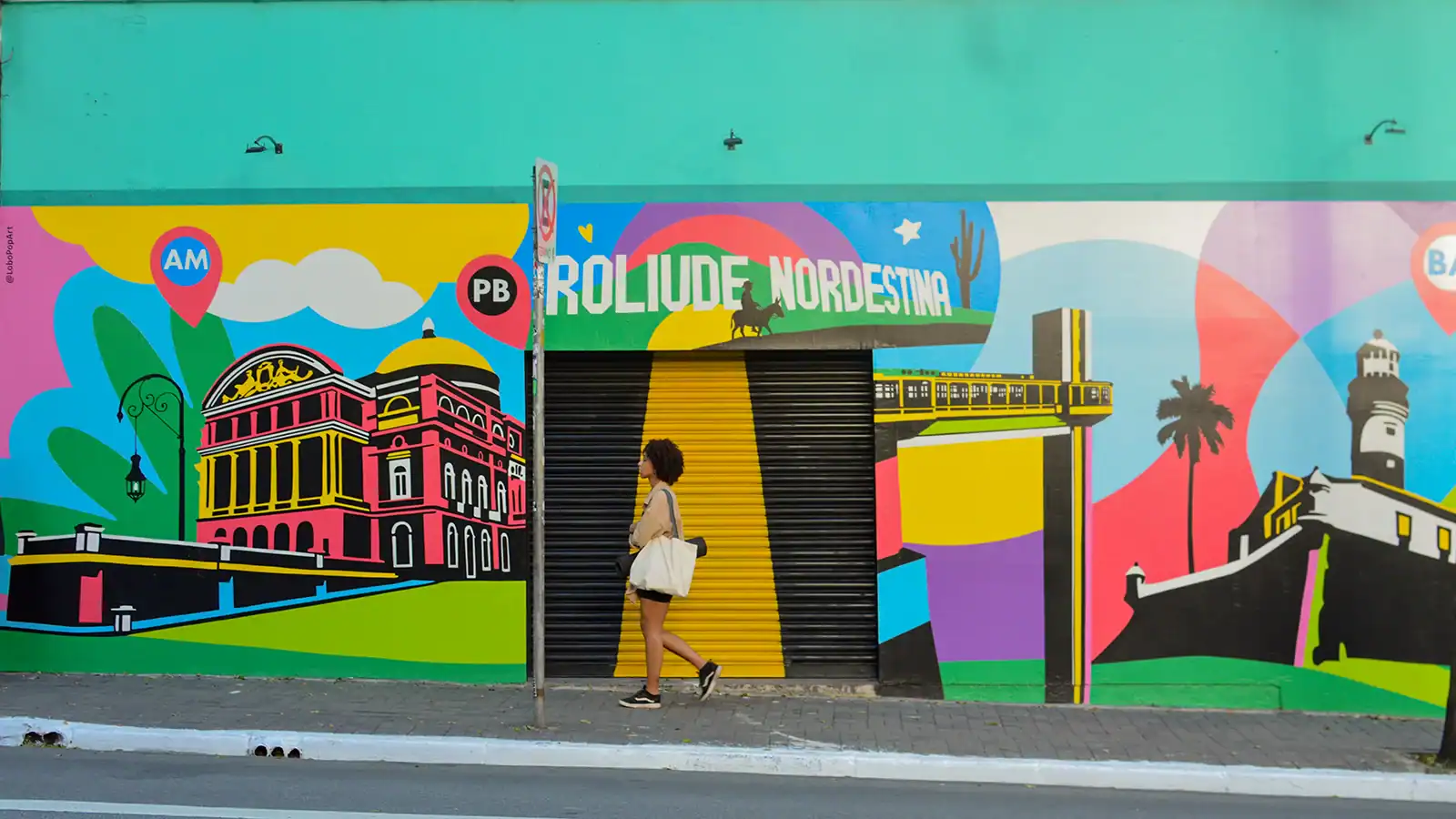
The painting keeps moving south. There’s the Hercílio Luz Bridge from Santa Catarina, the Monumento ao Laçador from Rio Grande do Sul, and the Coluna de Cristal associated with Pernambuco. São Paulo itself is present through the São Paulo Museum of Art (MASP), Luz Station’s clock, and other details from the city.
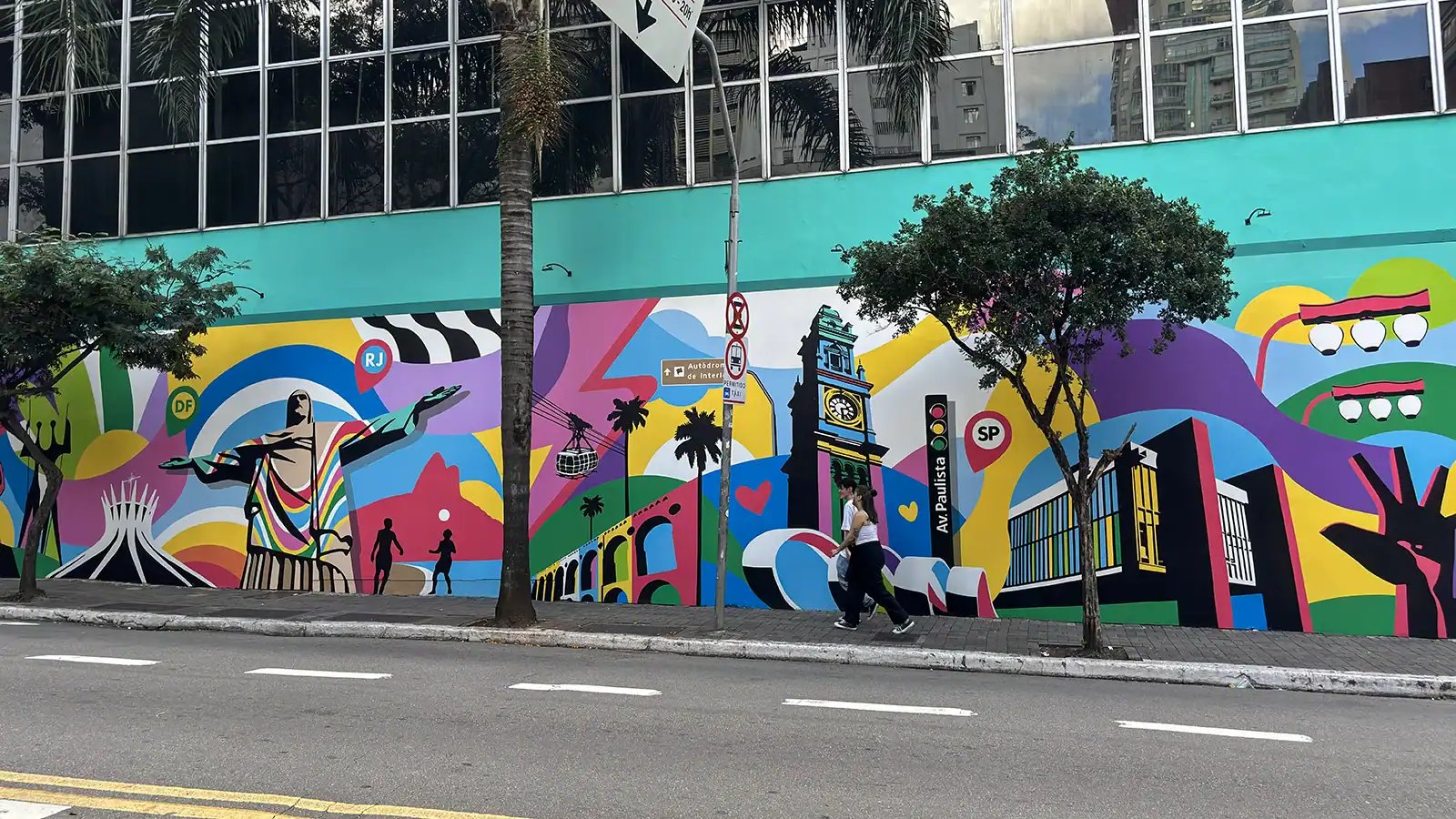
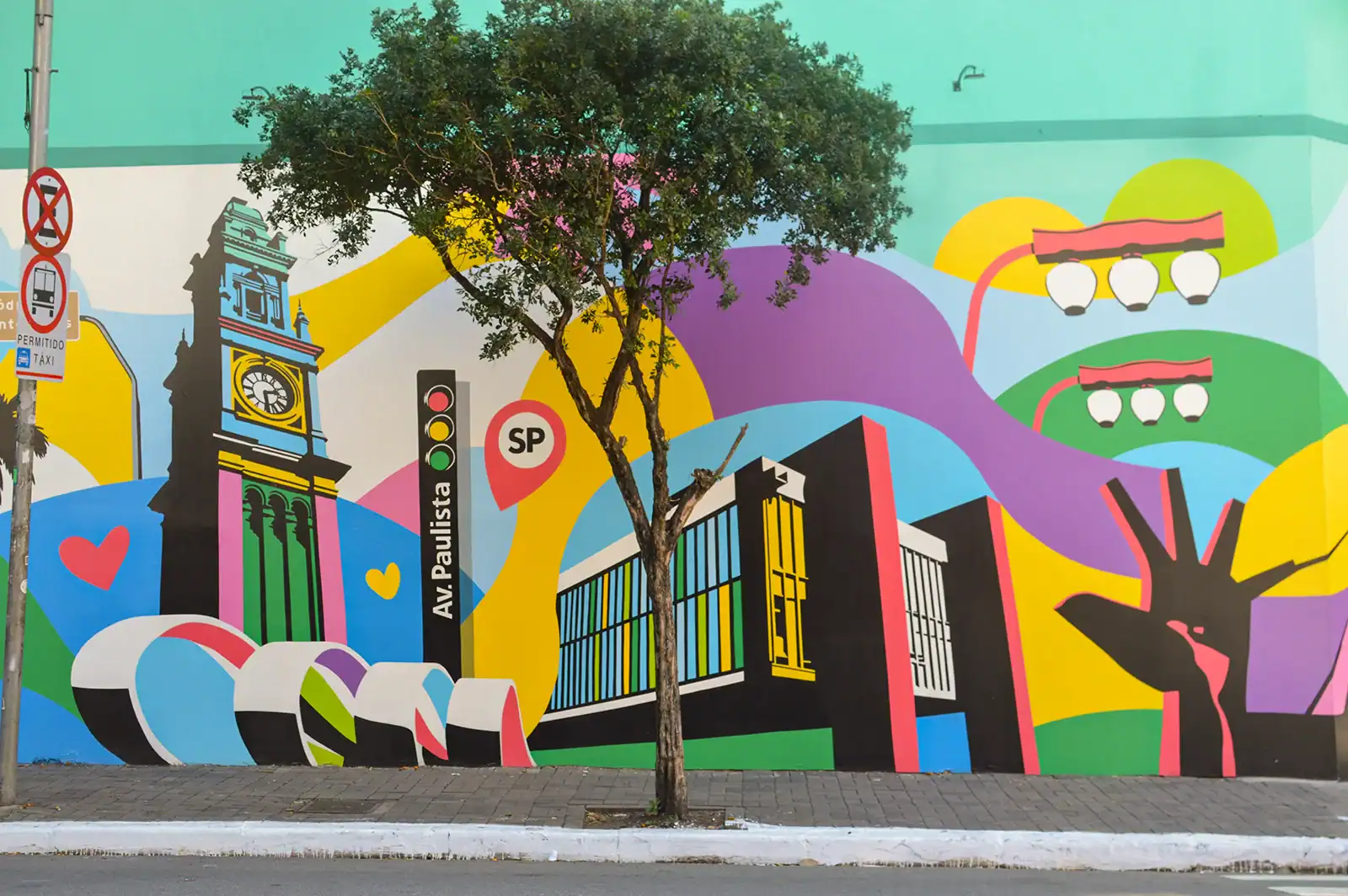
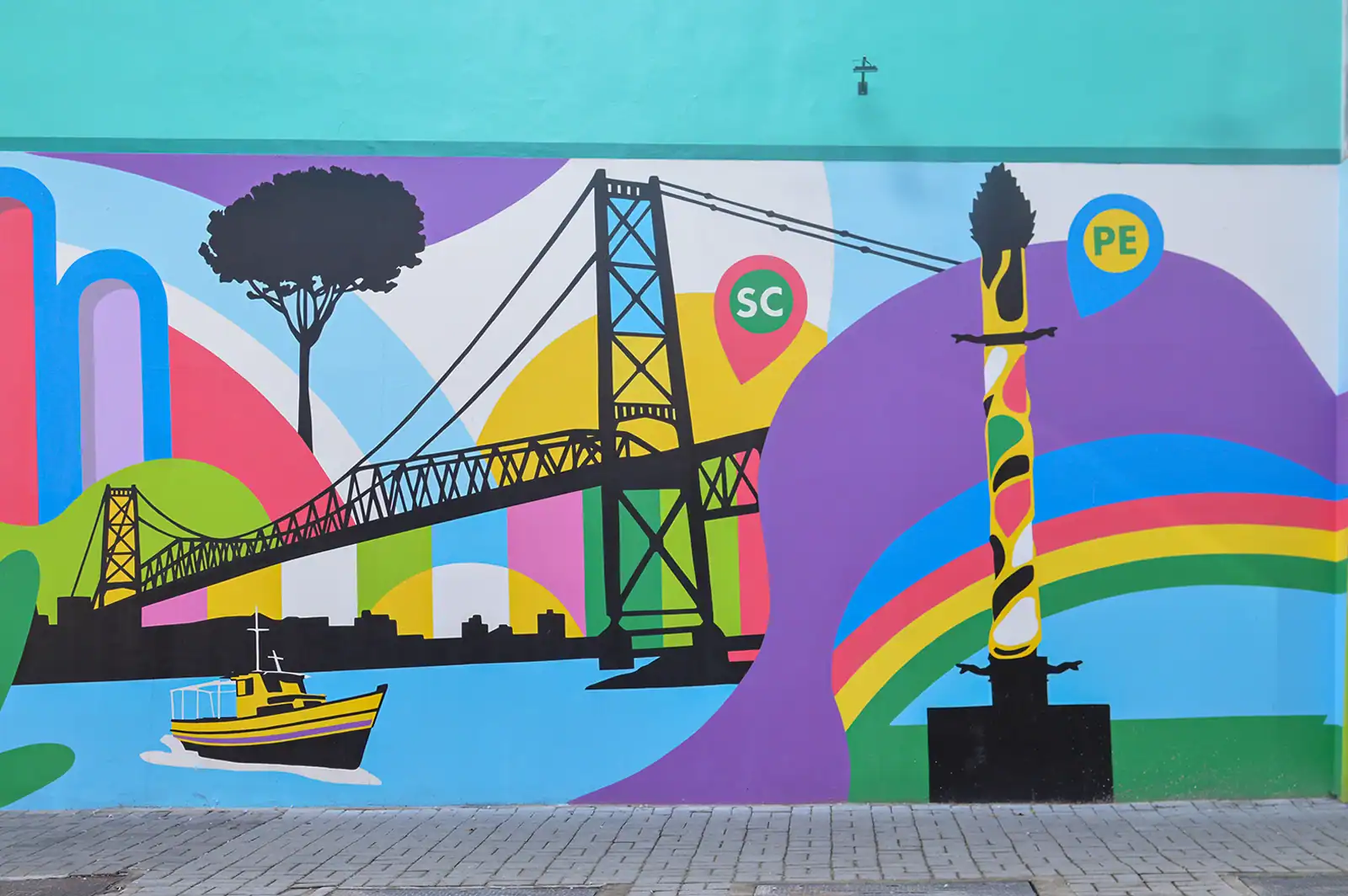
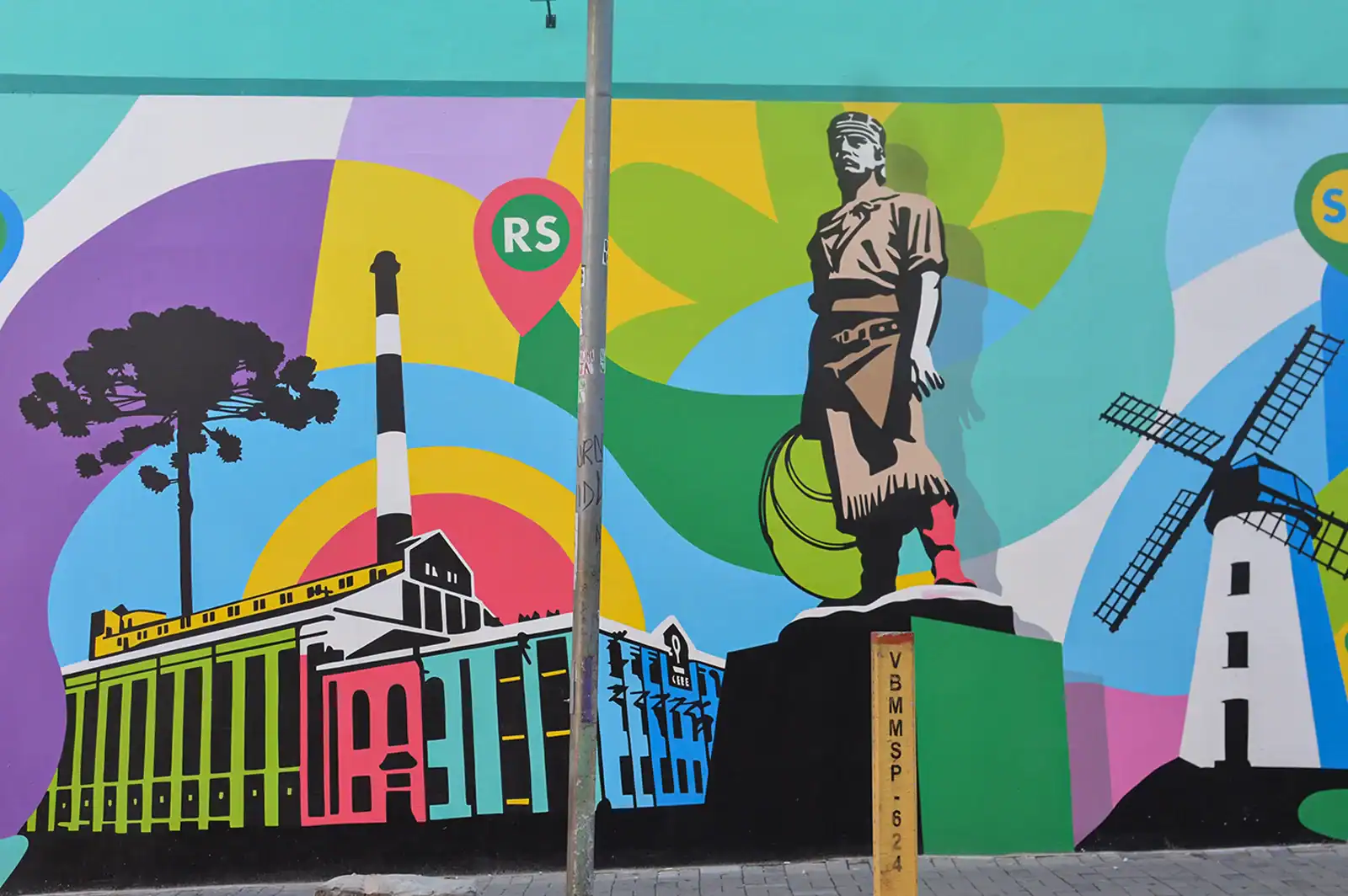
These are not separate state portraits, each neatly contained within a border. They belong to one composition. At this corner, Brazil’s geography gives way to a different kind of connection: the one made by people who have lived in, visited, or missed those places.
The mural includes Amazonas, Bahia, Ceará, Espírito Santo, Goiás, Minas Gerais, Paraíba, Paraná, Pernambuco, Rio de Janeiro, Rio Grande do Sul, Santa Catarina, São Paulo, Sergipe, and the Federal District, where Brasília is located.
Four Months of Painting, Entirely by Hand
From across the street, the mural reads as a field of flat color and strong outlines. Stand near it and the brushwork becomes visible. There is no spray paint anywhere in the composition.
Lobo began by preparing the masonry wall and transferring his drawing to architectural scale. He then built up the colored areas in successive coats, worked through the smaller details, and brought the composition together with solid black contours. A protective resin was applied after painting to help the surface withstand sun and rain.
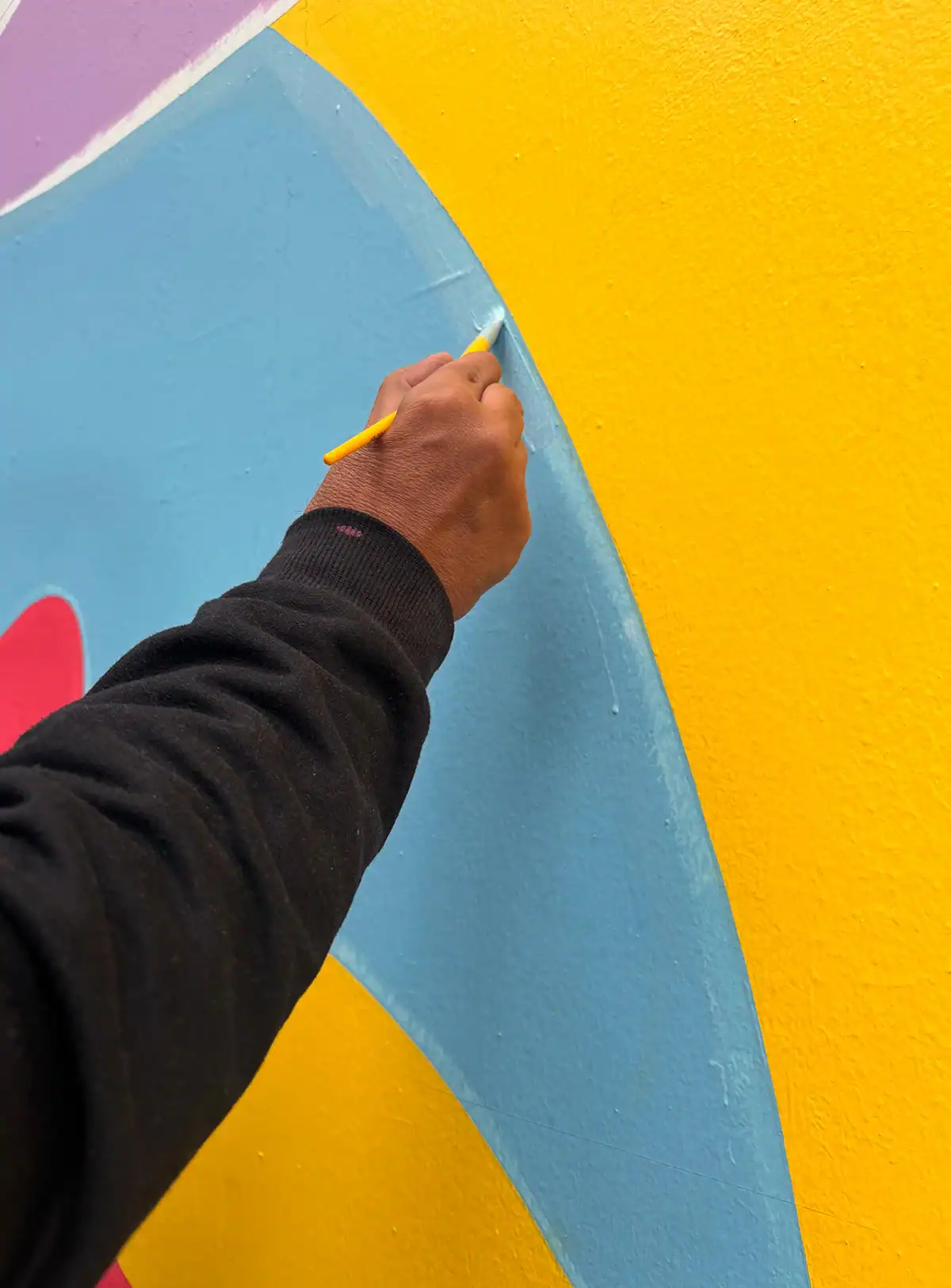
The work followed the building around the corner in three stages. The Rua Luís Coelho side was finished on March 2, 2026. The corner itself was completed on March 24. The long Rua Augusta section came last, with the entire mural finished on June 29, 2026.
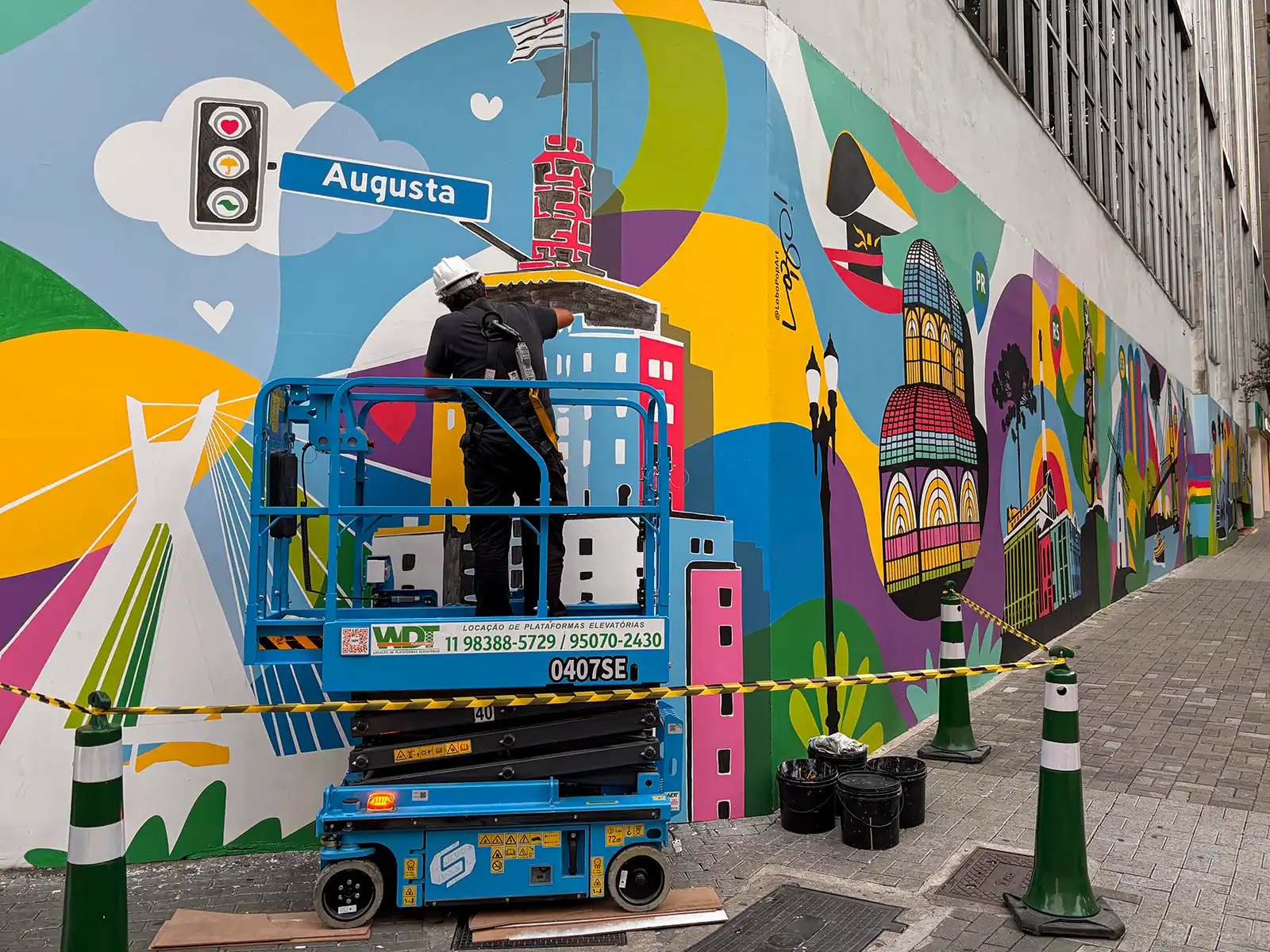
It took approximately four months of work amid traffic, pedestrians, rain, cold, and hot days. Some sections required an elevated work platform. Much of the time, Lobo was painting with a city moving around him rather than working in the quiet of a studio.
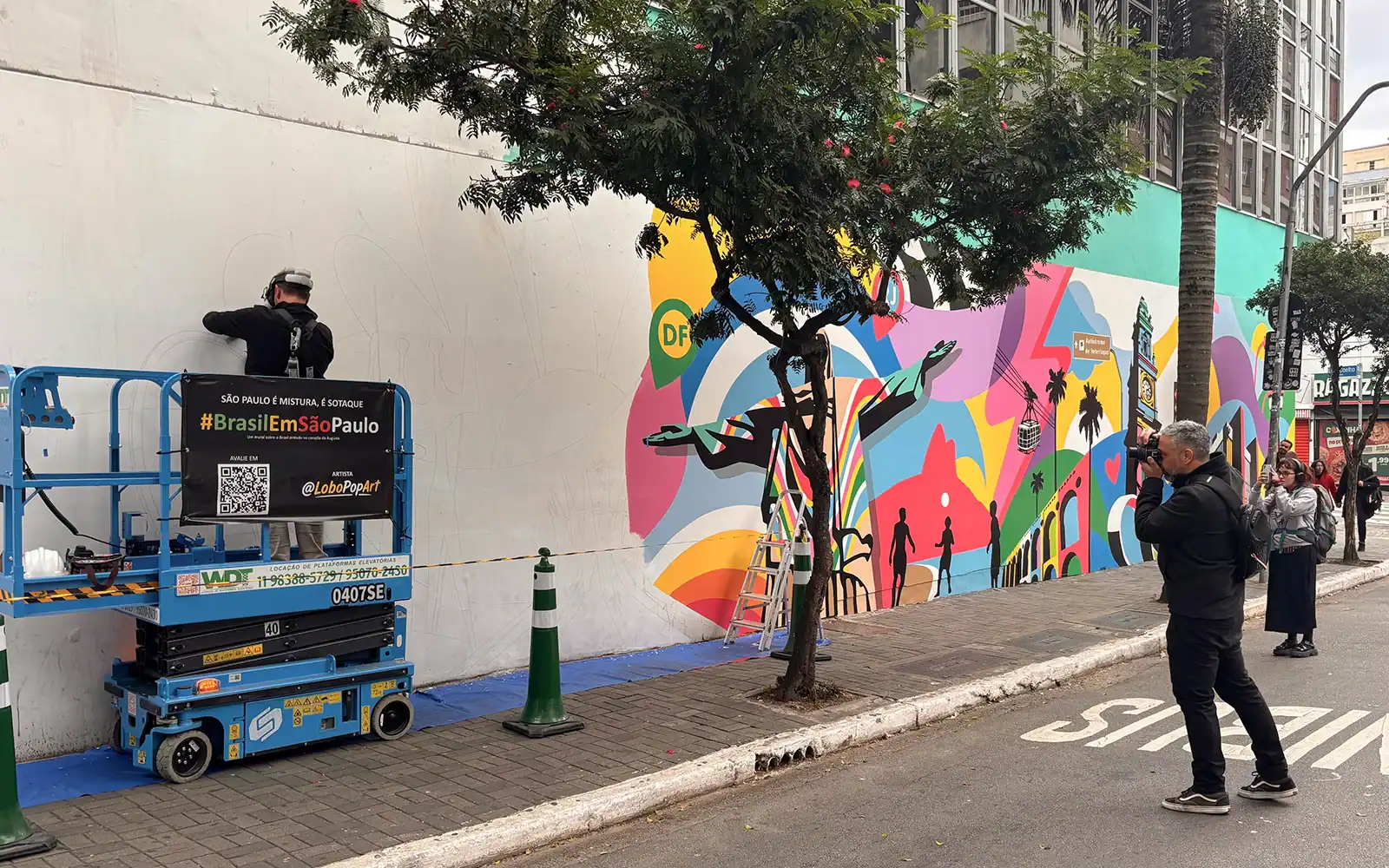
That’s an important distinction. On canvas, the artist decides when a painting is ready to be seen. Here, every stage was public. People watched a landmark begin as a few lines and return days later to find it covered in color.
When a Street Corner Becomes Part of the Artwork
As the mural developed, a small ritual began. People stopped, looked for a place they knew, and called someone over to see it. A building might remind one visitor of home and another of a trip. Groups compared details, traded stories, and sometimes turned the sidewalk into an impromptu geography lesson.
Lobo remembers that reaction as one of the strongest parts of the project:
“I realized the mural wasn’t just depicting monuments. It was stirring memories. Some people became emotional when they recognized a place where they were born or had lived. The artwork ended up sparking conversations between people who probably would never have met.”
Lobo
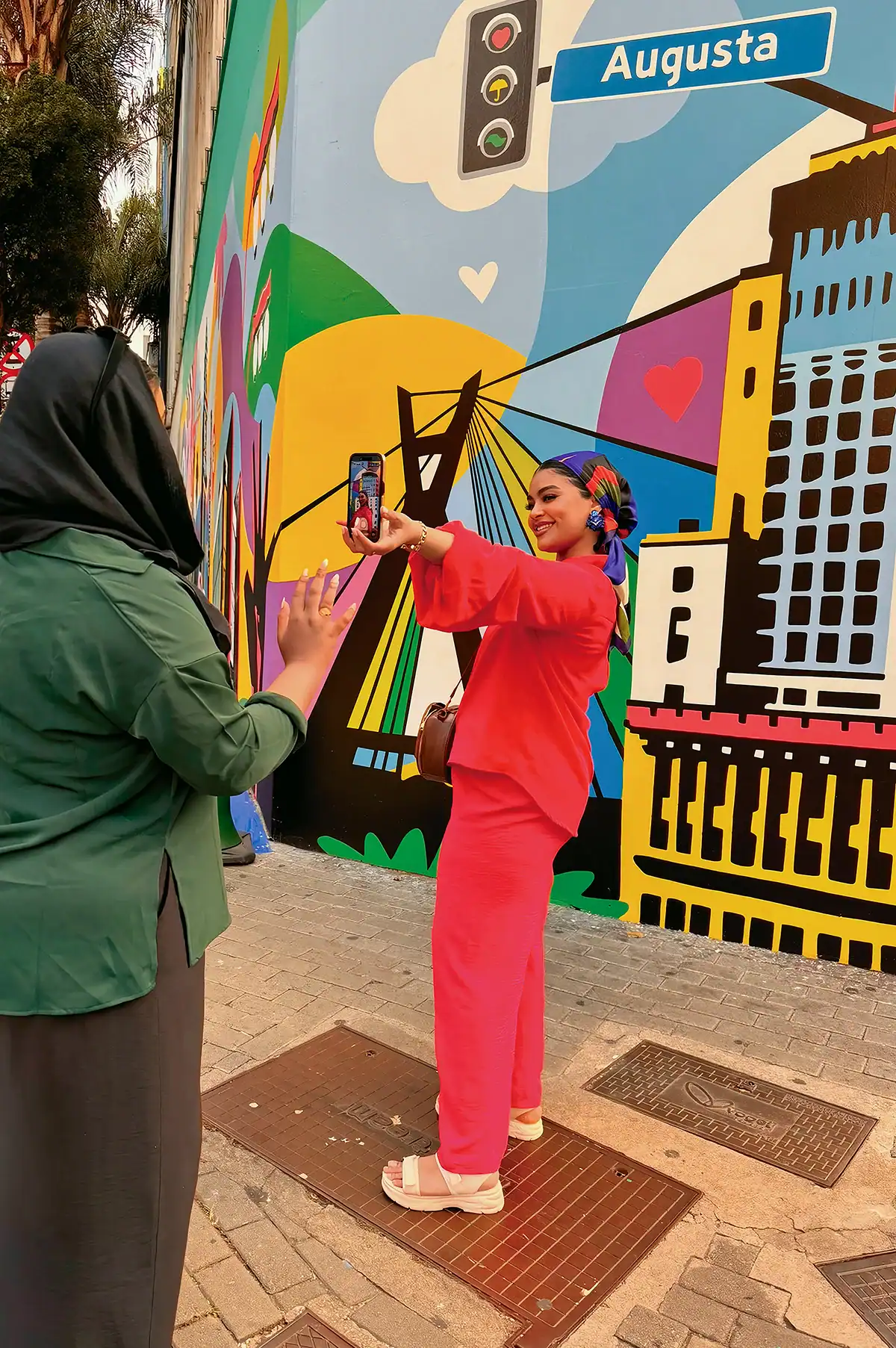
The corner also became a place to take pictures. A designated photo spot helped visitors frame the wall; even a yellow door became part of the scene. On busy days, it was common to see someone posing while another person stood back with a phone, trying to fit as much of the painting as possible into the photograph.
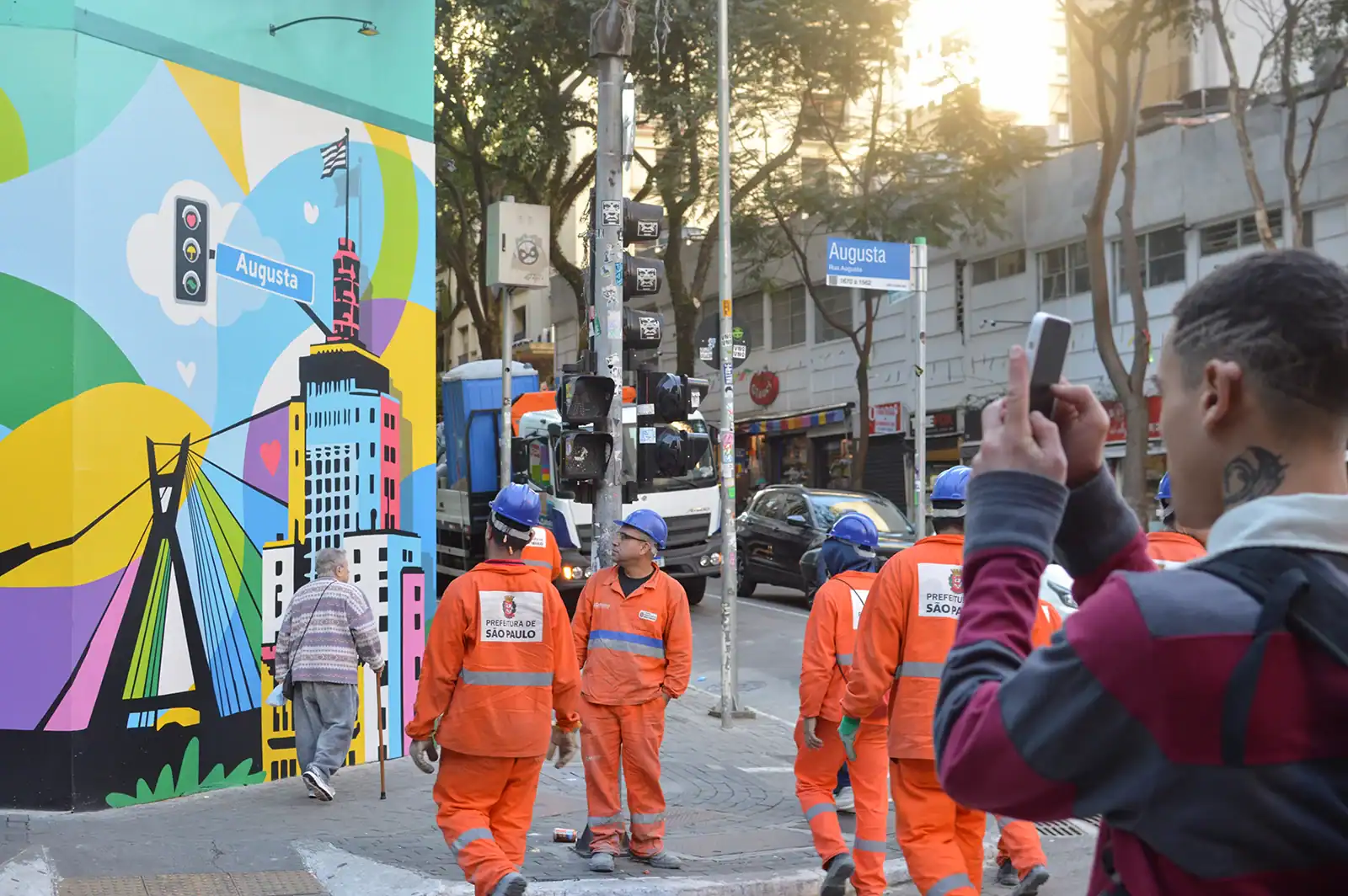
Things changed around the mural, too. Nearby facades were restored, curbs repainted, trash receptacles replaced, and vegetation trimmed. Dedicated lighting made the painting visible after dark, while the presence of municipal civil guards became more frequent.
Those improvements cannot all be credited to the mural. What can be said is that, during the project, the intersection began receiving a different kind of attention. People were no longer only passing through it. They were stopping to look.
Pop Art at an Architectural Scale
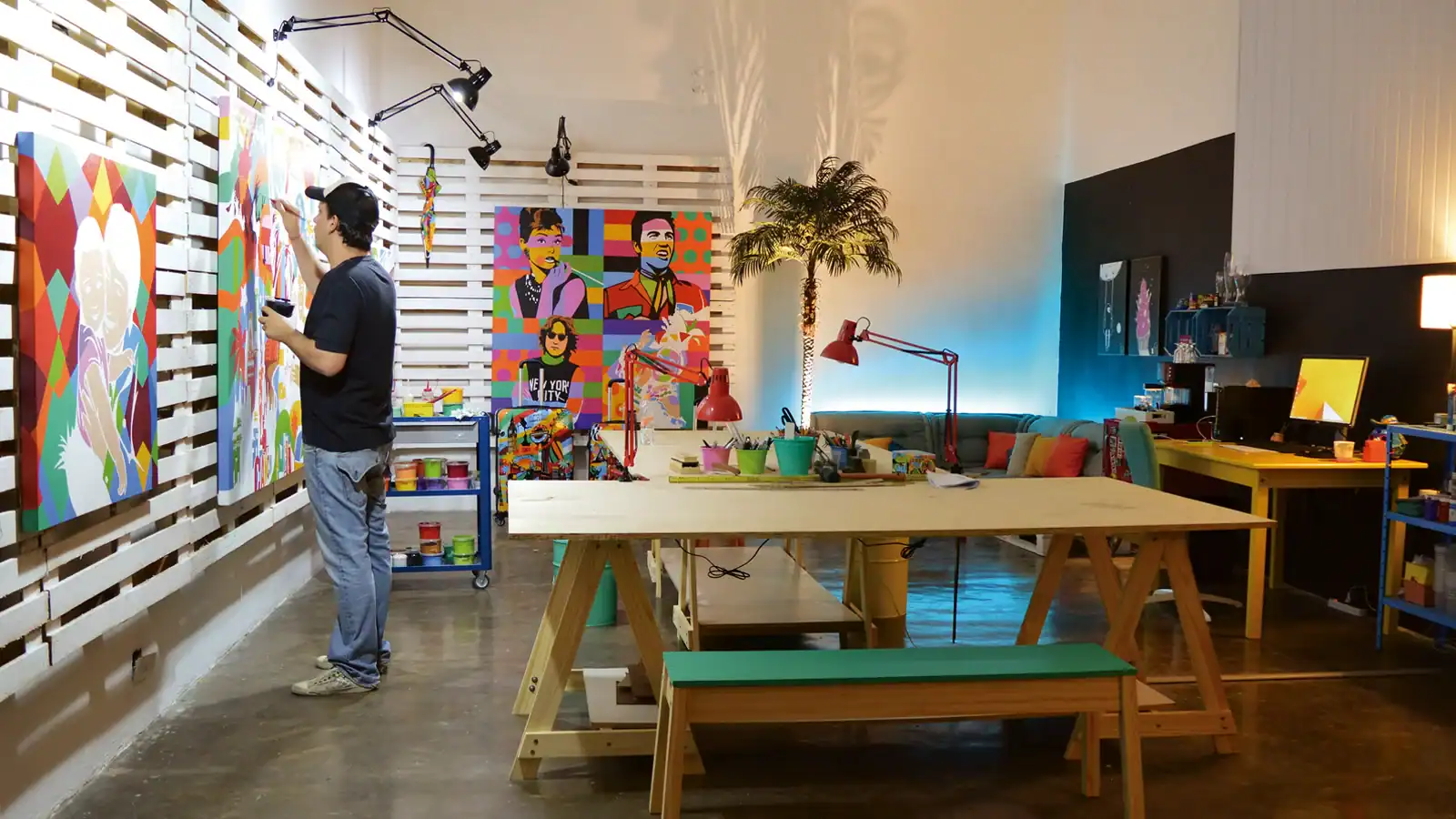
Lobo has been painting since 2003. His work began on canvas and gradually moved into other formats, including sculptures, installations, artwork for brands, and large-scale murals. Certain choices have stayed consistent: flat, saturated colors; clear black outlines; and an interest in the places, music, and everyday objects that carry personal meaning.
Another example is Lobo’s Los Angeles-inspired mural, which brings California landmarks and popular culture into a large-scale composition.
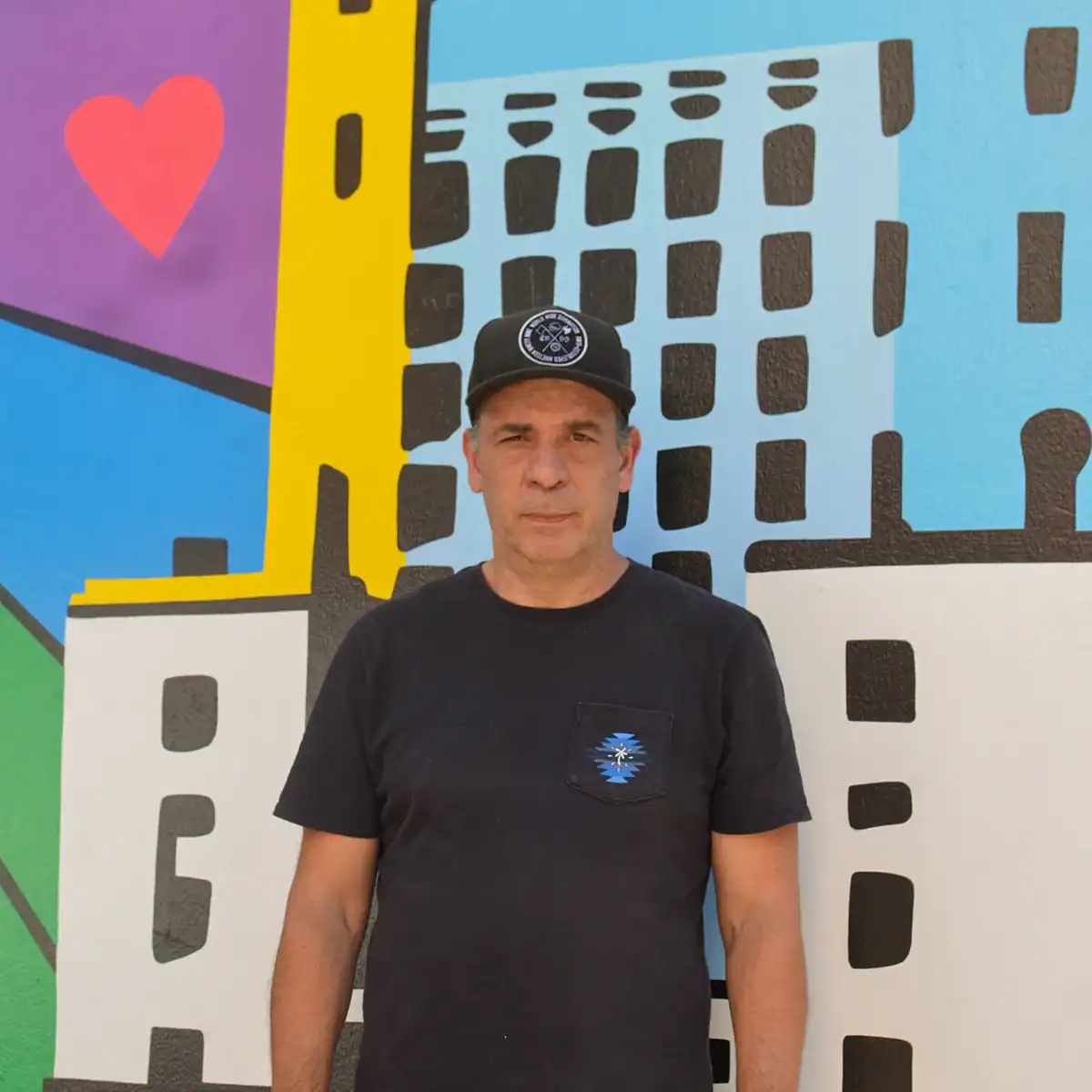
On a wall almost 243 feet long, those choices have to work differently. A person across the street needs to read the painting in a glance. Someone standing a few feet away should still have something to discover.
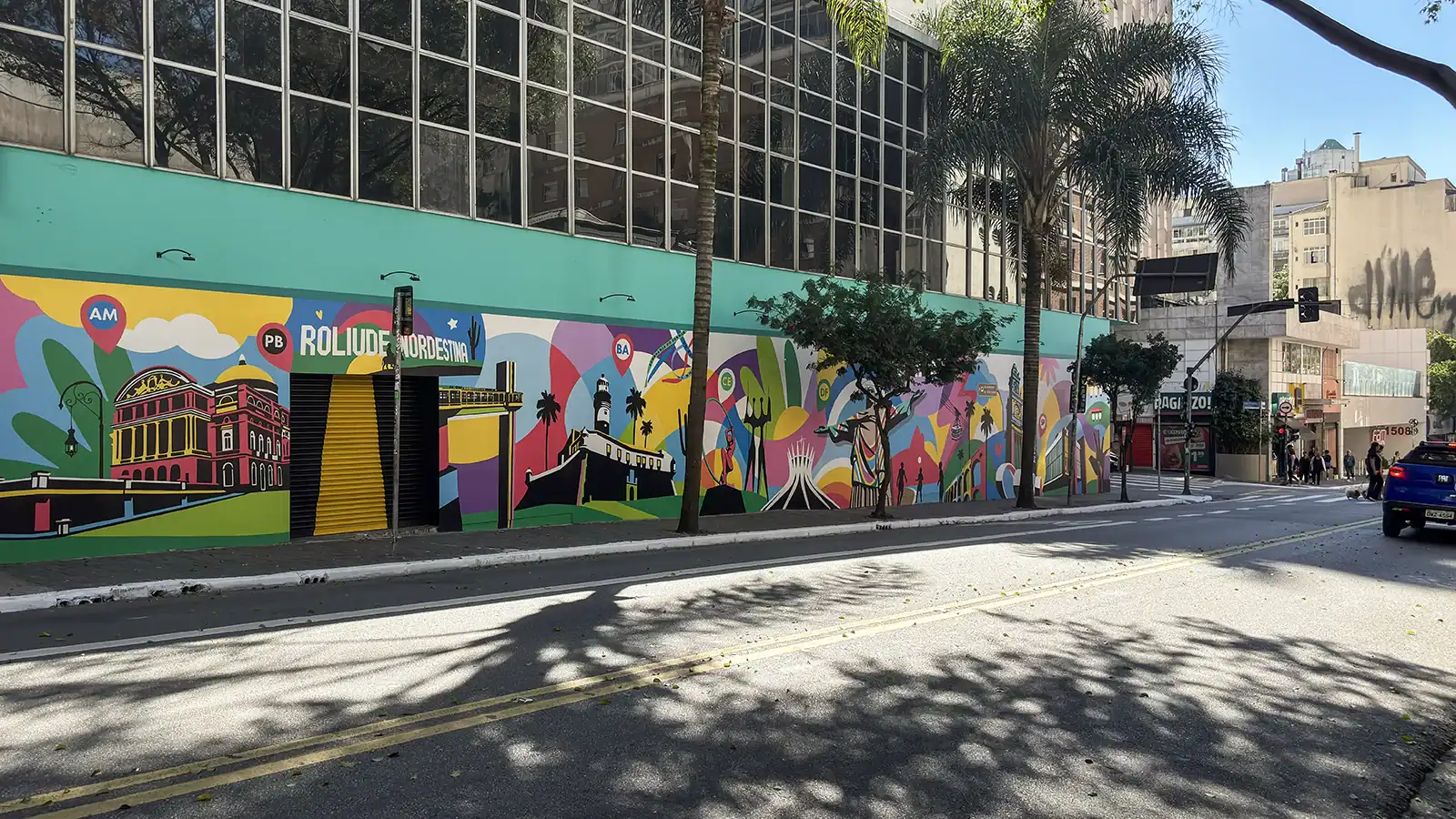
The two faces of the building make that change in scale particularly clear. Rua Augusta provides the long view. Turn onto Rua Luís Coelho and the composition continues around the architecture instead of ending at the corner. The painting is not simply placed on the building; the building changes how you experience it.
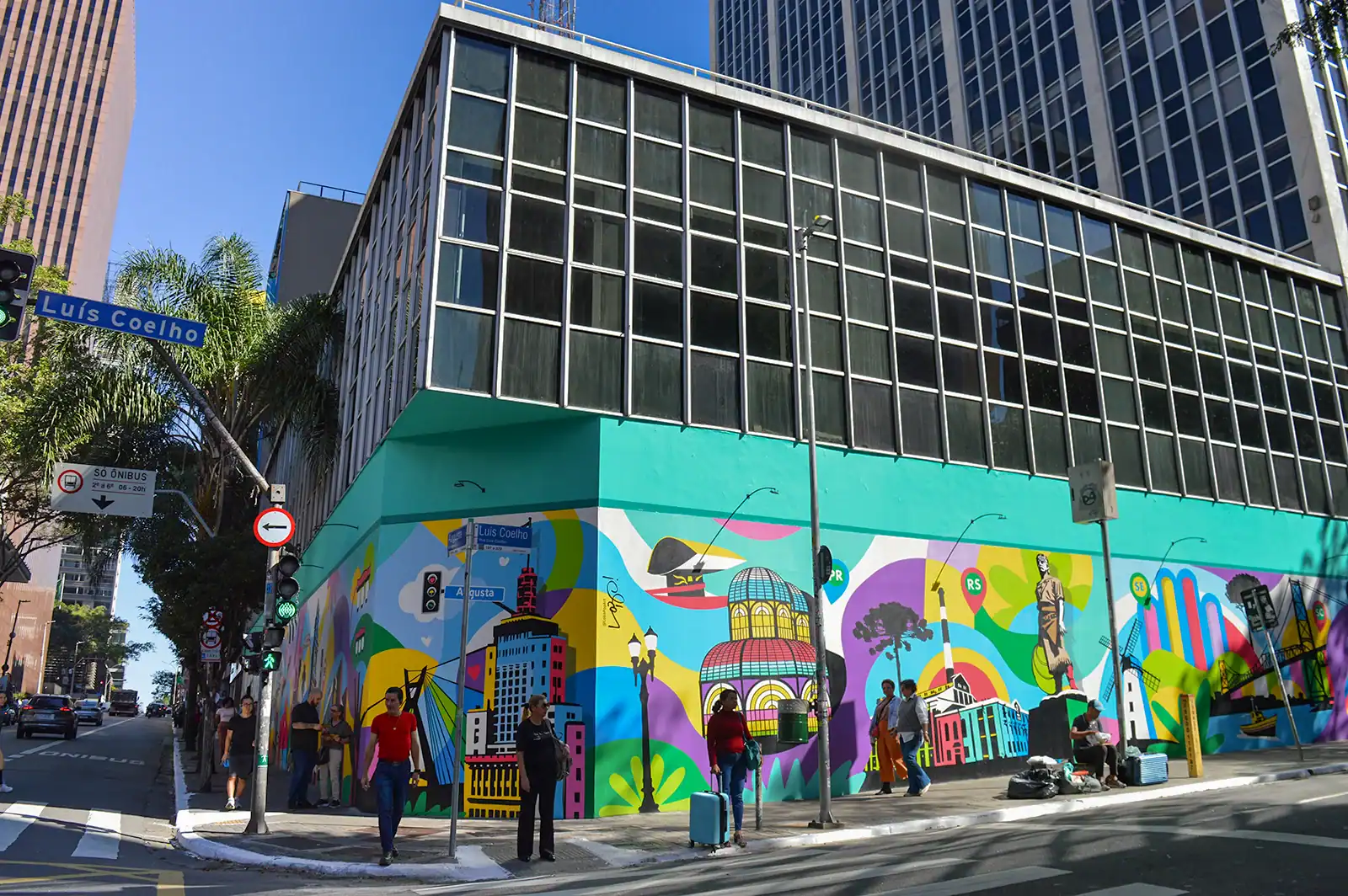
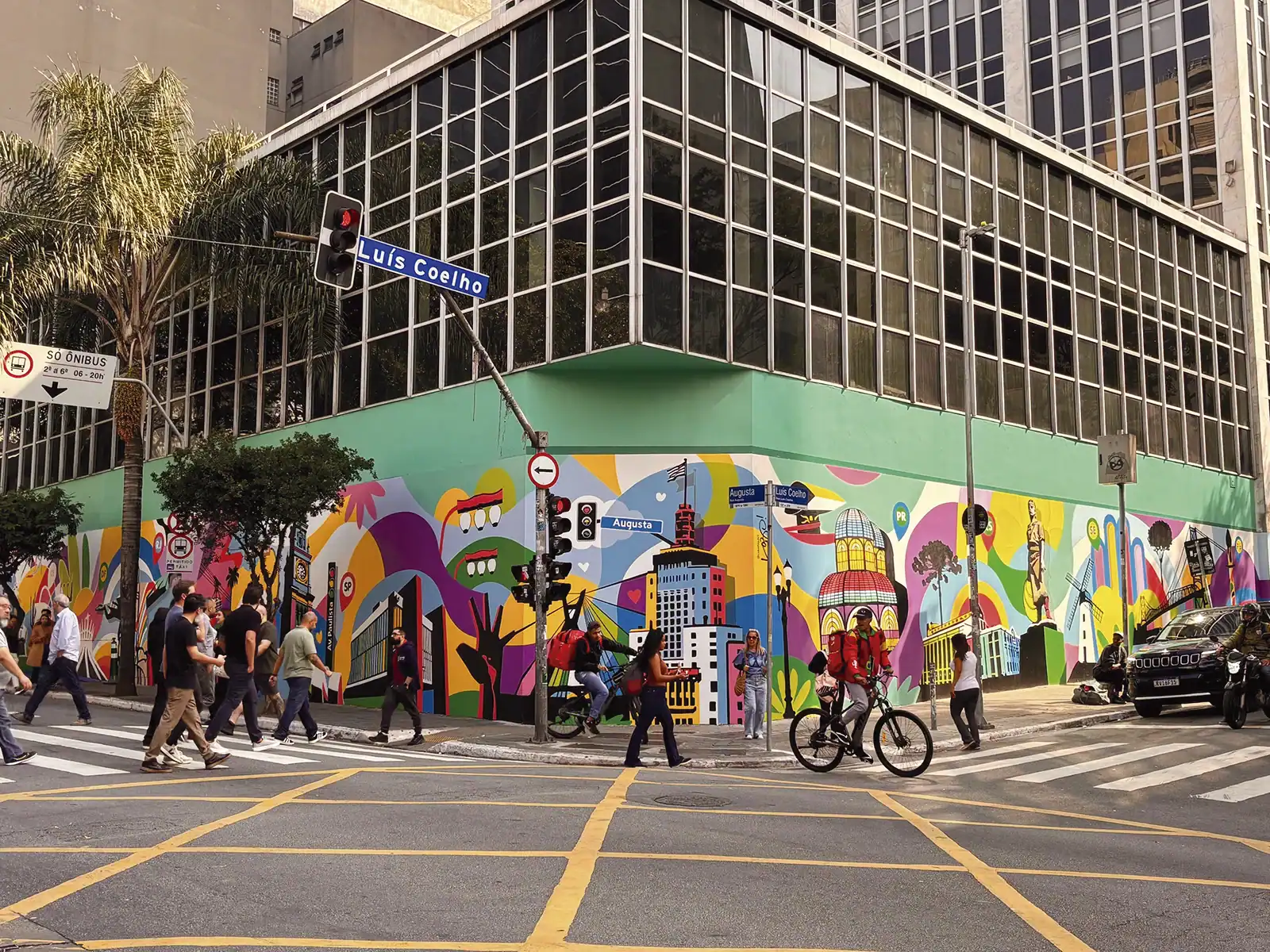
For Lobo, moving from a canvas to a wall doesn’t mean abandoning the craft of painting. The brushwork, layered colors, and carefully developed outlines characteristic of his smaller works are still here, only on a much larger surface.
His interest in Brazilian cities can be seen in another 2026 project: illustrations for Nutella’s Bom Dia Brasil collection, which featured 16 state capitals. That work put regional images on packaging; Brasil em São Paulo gave people the chance to encounter them together, in a public space, at the scale of a building.
For anyone considering original artwork for an architectural setting, the mural offers something more useful than a promise. It shows the finished painting, the process behind it, and how people responded to it on the street.
For inquiries about murals or original artwork for architectural spaces, contact Lobo.
Where to See the Mural in São Paulo
Brasil em São Paulo is at the intersection of Rua Augusta and Rua Luís Coelho, in the Consolação neighborhood of São Paulo, close to Paulista Avenue.
There is no admission fee or gallery entrance. The work can be viewed from the public sidewalk. Walk along Rua Augusta for the full scale of the composition, then round the corner onto Rua Luís Coelho to see how the painted landmarks continue across the second wall.
The mural is illuminated at night, though daylight makes it easier to pick out the smaller details. Consolação Station (Line 2-Green) and Paulista Station (Line 4-Yellow) are nearby transit options.
Visitor details
- Location: Rua Augusta at Rua Luís Coelho, Consolação, São Paulo, Brazil.
- Access: Free, outdoors, from the sidewalk.
- Closest major reference: Paulista Avenue.
- Transit: Consolação and Paulista subway stations.
- Map: Find the mural on Google Maps.
- Updates and photographs: @MuralBrasilEmSaoPaulo and @LoboPopArt.
- Visitor listing: Tripadvisor — Mural Brasil em São Paulo.
Project Details and Press Coverage
The mural attracted coverage beyond São Paulo. Local reporting focused on its presence on Rua Augusta, while newspapers in other parts of Brazil looked closely at the places from their regions that appeared in the composition.
Selected coverage
Articles in Portuguese:
- VEJA São Paulo reported on the nearly 74-meter mural at Rua Augusta and Rua Luís Coelho.
- Correio Braziliense focused on the inclusion of Brasília and other Brazilian regions.
- A Gazeta highlighted the Convento da Penha, representing Espírito Santo.
- Alô Alô Bahia covered the references to Bahia.
Artwork Information
| Title | Brasil em São Paulo (Brazil in São Paulo) |
|---|---|
| Artist | Lobo Pop Art |
| Artistic assistance | Patricia Grigio |
| Site | Rua Augusta and Rua Luís Coelho, São Paulo, Brazil |
| Dimensions | 243 ft × 16.2 ft (73.98 m × 4.93 m) |
| Medium | Acrylic paint on masonry, hand-painted with brushes; protective resin finish |
| Duration | Approximately four months |
| Completed | June 29, 2026 |
| Subject | Cultural and architectural references from 14 Brazilian states and the Federal District |
About the artist
Lobo is a Brazilian Pop Art artist who has worked with painting since 2003. His practice spans canvases, murals, and collaborations with brands, always returning to places, people, and the stories they carry. Brasil em São Paulo is one of the clearest examples of that approach at a public scale.


Leave a Reply